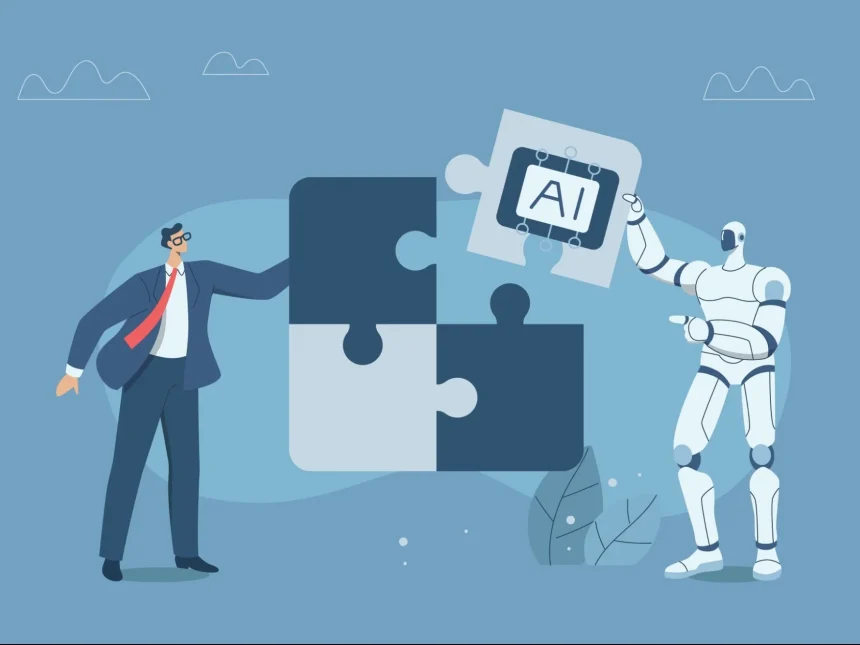
Artificial intelligence (AI) is no longer a futuristic concept or a peripheral technology. In 2026, AI has firmly established itself as a central element in corporate strategy and decision-making, transforming how companies plan, operate, and compete in the global marketplace. Organizations across industries are embedding AI into core processes, from strategic planning and operational efficiency to customer engagement and product development.
AI Integration into Corporate Strategy
Corporations are increasingly using AI to inform strategic decisions, leveraging its ability to process vast amounts of data, uncover patterns, and generate actionable insights. AI-driven analytics tools allow executives to:
- Predict market trends and consumer behavior with greater accuracy.
- Assess risks and opportunities in real time.
- Optimize resource allocation across projects and business units.
AI is enabling a shift from intuition-based decision-making to data-driven strategies, providing companies with a competitive advantage in rapidly changing markets.
Key Applications of AI in Corporate Decision-Making
1. Strategic Forecasting and Market Analysis
AI algorithms analyze large datasets, including financial reports, social media trends, and macroeconomic indicators, to forecast market demand, pricing trends, and competitive activity. By simulating different scenarios, companies can:
- Identify emerging opportunities in new markets.
- Optimize product portfolios to maximize revenue and profitability.
- Anticipate competitor moves and adapt strategies proactively.
2. Operational Optimization
AI is being used to streamline operations, reduce costs, and improve efficiency. Examples include:
- Predictive maintenance in manufacturing and logistics to minimize downtime.
- AI-driven supply chain optimization, adjusting inventory and production schedules based on real-time data.
- Automated workflow management in service organizations to improve response times and reduce errors.
3. Customer Insights and Personalization
Understanding customer behavior has become more sophisticated with AI. Companies can:
- Analyze purchase patterns, engagement metrics, and feedback to tailor offerings.
- Deliver personalized recommendations, targeted promotions, and proactive service.
- Improve customer retention by predicting churn and taking timely action.
4. Risk Management and Compliance
AI tools are increasingly central to risk assessment and regulatory compliance, including:
- Fraud detection in financial transactions.
- Monitoring operational risks in real time across global operations.
- Ensuring compliance with data privacy and environmental regulations through automated audits.
Corporate Adoption and Organizational Impact
Surveys indicate that a growing majority of Fortune 500 and large multinational companies are embedding AI into their decision-making frameworks. This trend is reshaping organizational structures and processes:
- C-level executives, including CFOs, CIOs, and Chief Strategy Officers, are integrating AI insights into board-level decision-making.
- Business units are leveraging AI to drive operational improvements, product innovation, and customer engagement.
- Cross-functional teams now include AI specialists, data scientists, and analysts to translate AI outputs into actionable business decisions.
AI adoption has also fostered a culture of continuous learning, where employees are trained to understand and interpret AI insights rather than rely solely on traditional experience or intuition.
Benefits of AI-Driven Decision-Making
- Enhanced Accuracy and Speed: AI can process millions of data points faster than human teams, providing near real-time insights.
- Reduced Bias: By relying on quantitative data and models, companies can reduce subjective biases in decision-making.
- Predictive Capabilities: AI enables organizations to anticipate trends, risks, and opportunities before competitors.
- Strategic Agility: Companies can adapt strategies rapidly based on dynamic insights from AI systems.
Challenges and Considerations
Despite its benefits, integrating AI into corporate strategy presents challenges:
- Data Quality and Governance: AI outputs are only as good as the data fed into them. Ensuring clean, accurate, and comprehensive datasets is critical.
- Interpretability: Complex AI models, especially deep learning systems, may produce insights that are difficult to explain, raising transparency and accountability concerns.
- Ethical and Regulatory Risks: AI-driven decisions can inadvertently introduce bias or violate regulations, requiring careful oversight.
- Cultural Adoption: Organizations must cultivate a mindset that trusts AI recommendations while maintaining human judgment in final decision-making.
Future Trends in AI-Enabled Corporate Strategy
- Integration of Generative AI: Companies are increasingly using AI to generate strategic scenarios, simulate market reactions, and even propose business model innovations.
- AI in Boardroom Analytics: Decision support systems will provide executives with real-time dashboards powered by predictive and prescriptive AI.
- Collaborative Human-AI Teams: The future of decision-making involves a partnership where AI handles data-intensive tasks while humans focus on creativity, ethics, and judgment.
- AI Across Industries: Beyond technology, sectors such as healthcare, finance, retail, logistics, and energy are embedding AI deeply into core strategic functions.
Artificial intelligence has evolved into a core tool for corporate strategy and decision-making, reshaping how companies operate and compete. By enabling predictive insights, operational optimization, personalized customer engagement, and risk management, AI is enhancing the quality, speed, and effectiveness of corporate decisions.
Organizations that successfully integrate AI into strategy — while maintaining human oversight, ethical standards, and data governance — are positioned to achieve sustainable competitive advantages in an increasingly complex and fast-moving global market.
AI is no longer a support function; it has become a strategic partner, guiding corporate leadership toward more informed, agile, and forward-looking decisions.